Common Fulcrum Fixes
While at university I learnt the basic theory of how percussion instruments are constructed and how the parts work together. However, no one ever really taught me how to repair my instruments when they broke. The vast majority of what I know now is self-taught, gained through trial and error and repetition. And it’s that repetition I’d like to focus on today. While there are certainly skills I still want to learn, there are some tuned instrument repair jobs I’ve completed so often that I could do them in my sleep!
So, here’s to some of the most common mallet percussion fixes!
1. Orff Xylophones and Metallophones
Studio49. Sonor. Optimum Percussion.
These popular Orff percussion brands support classroom music programs across Australia by providing xylophones, bass marimbas, and metallophones to help deliver the Orff Schulwerk approach to music education. As such they get used a lot year-round.
In terms of general construction, they’re pretty basic: a box with a dampening cord and pegs/nails which the bars slot onto. Unfortunately, it’s those core components that tend to break the most, including missing or bent pegs, disintegrated dampening cords, and cracked or loose frames. Luckily, a bunch of genuine or DIY parts are available to easily replace these broken components!
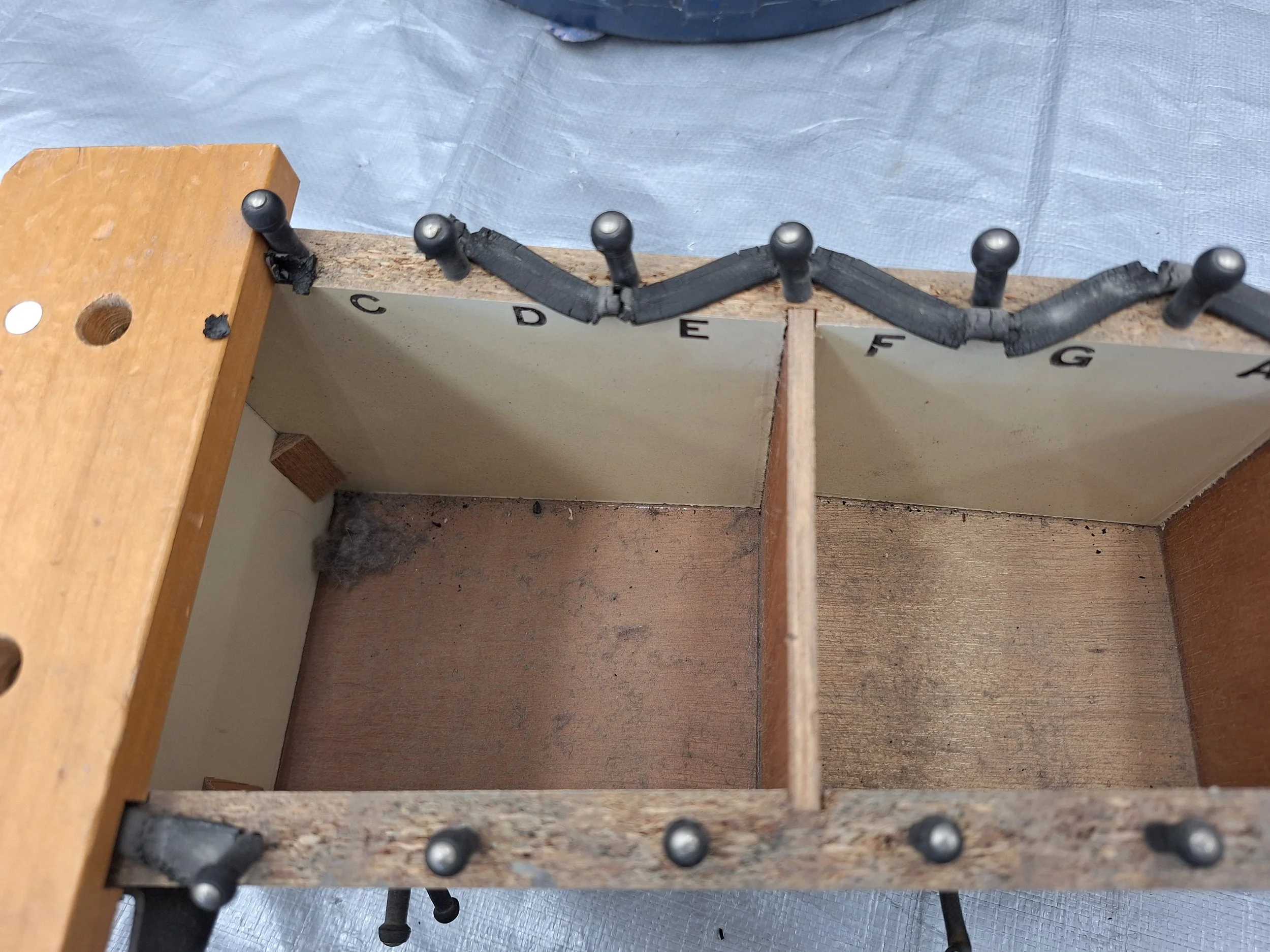
Orff metallophone frame with disintegrating dampening cord and bent pins.
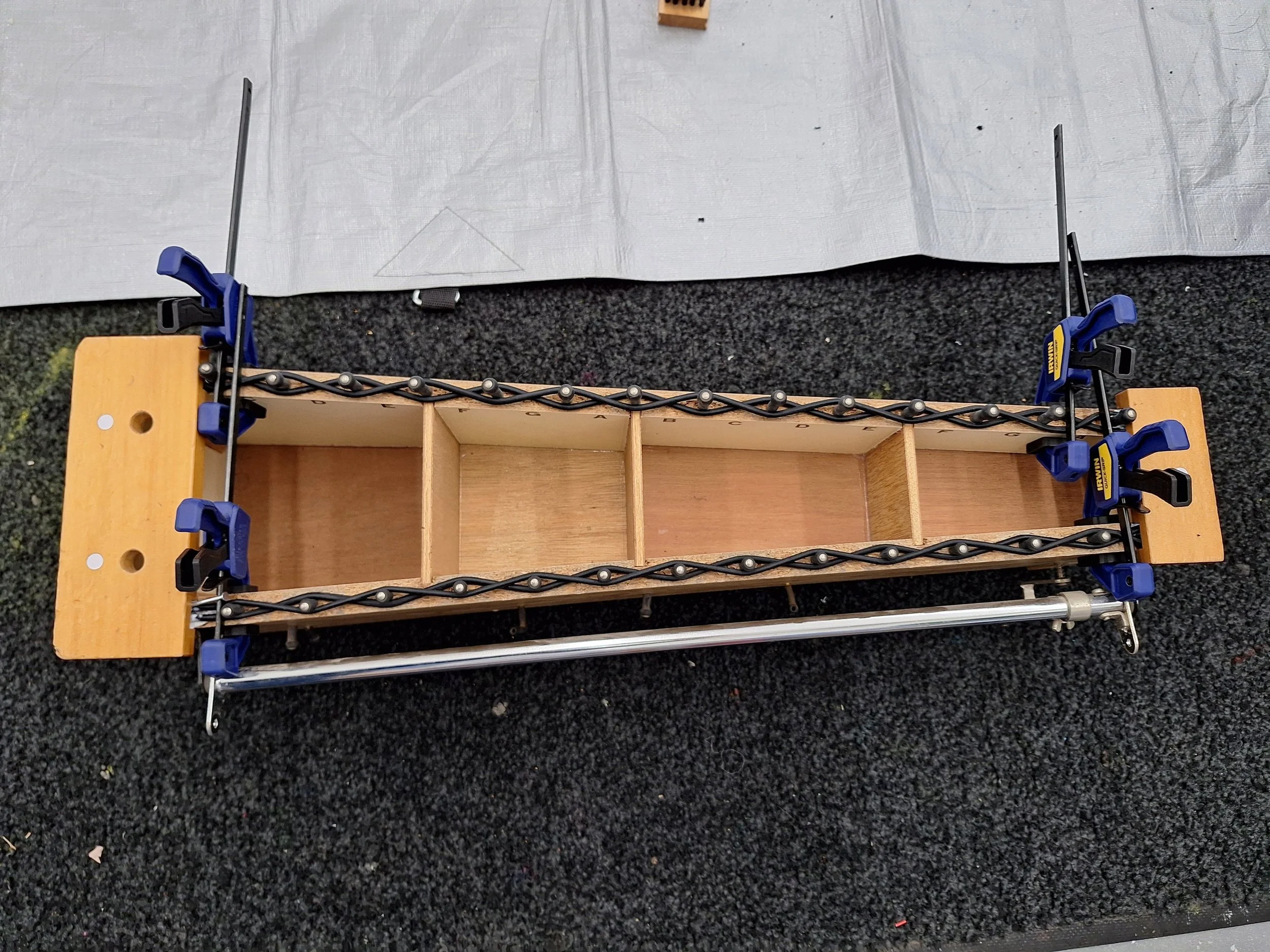
Orff metallophone mid-repairs. The cord has been replaced and pins straightened.
2. Orchestral Xylophones and Marimbas
Orchestral xylophones and marimbas encounter similar problems to their Orff cousins, just on a larger scale. Disintegrated or missing post dampeners are a regular occurrence though they’re a bit more difficult to replace than Orff pegs/nails. Genuine parts are available from places like Steve Weiss but these can be expensive (particularly with shipping!). Fortunately, about 2 years ago an electrician helped me find a robust locally sourced DIY alternative!
The second most common issues relate to the suspension cord and springs which operate in tandem to suspend the bars so they ring clearly. When a bar is struck it vibrates, causing the bar to rub against the cord. Meanwhile the springs hold that cord taunt, enduring considerable tension. Vibrations plus force can cause the cord to fray or snap and the springs to stretch out of shape over time. Fixing this problem is simply a process of restringing the bars like a massive necklace, replacing the springs, and knotting the cord properly through the springs. It’s really rather satisfying.
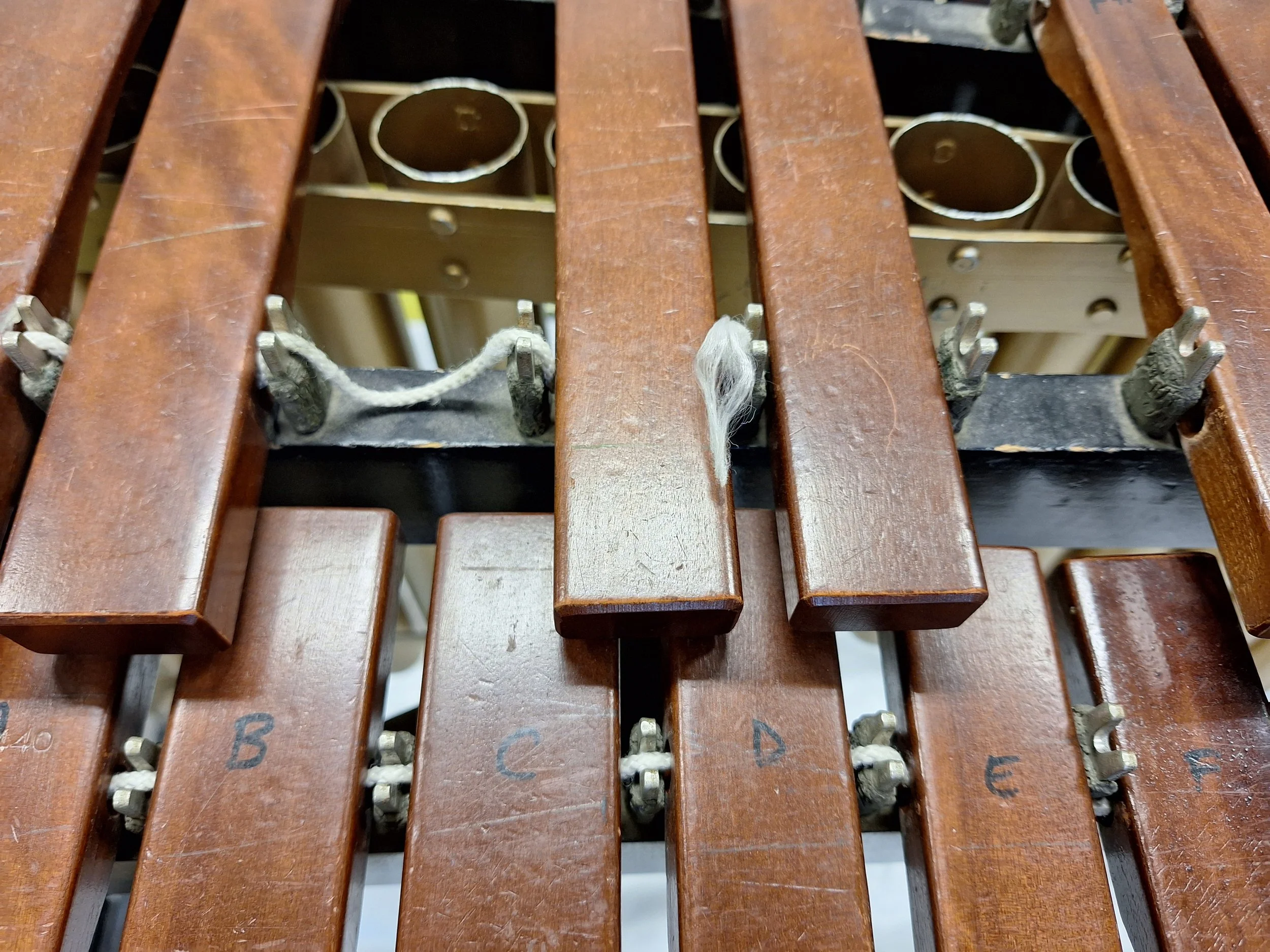
Xylophone with cord snapped. Unsupported bars are resting directly on frame crossbeams.
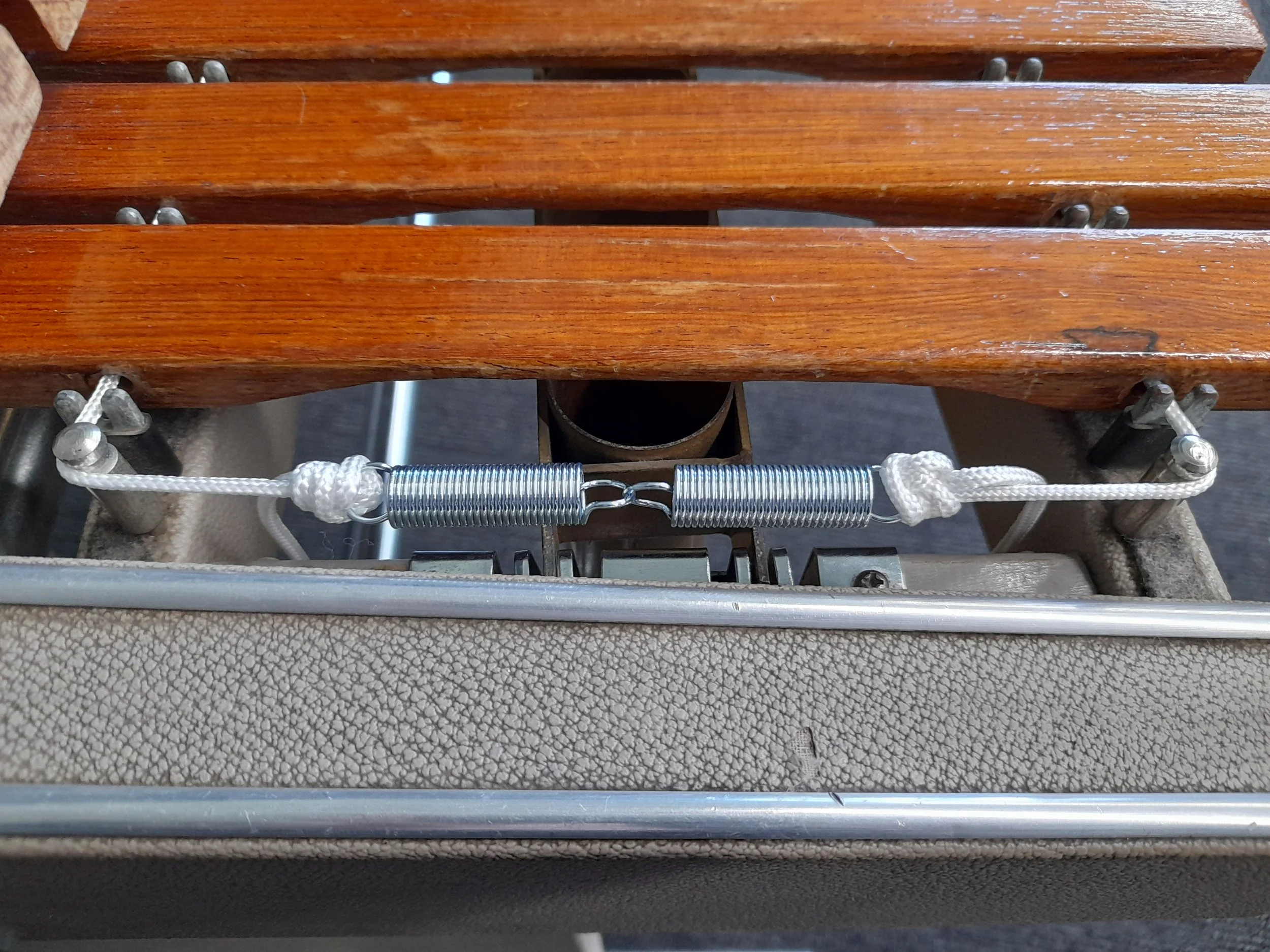
Newly replaced xylophone tensions springs and cord.
3. Vibraphones
Vibraphones encounter all the issues of other orchestral mallet instruments with the additional complexity of an intricate dampening mechanism. Problems which regularly crop up in relation to the vibes dampening mechanism include:
Missing fan belt
Bent pedal adjustment pole
Loose pedal stay
Broken or missing motor
Imbalanced dampening bar
I once worked on a vibraphone which had almost all of these issues plus such bad structural stability that it was held together with duct tape and dreams. Turns out neither of the central cross beams were connected which was causing it to collapse at the slightest provocation. Each collapse in turn warped the frame further out of shape and meant the cross beams could no longer align. The only solution was to deconstruct the whole instrument and put it back together again after having bent the warped components back into shape.
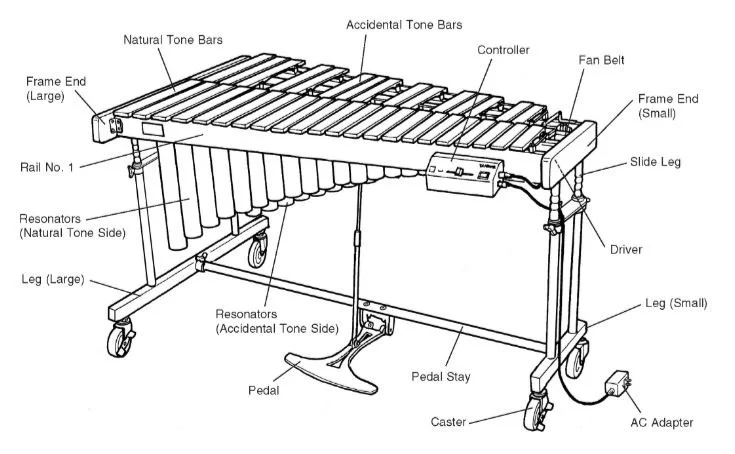
Anatomy of a vibraphone (courtesy of Yamaha website).
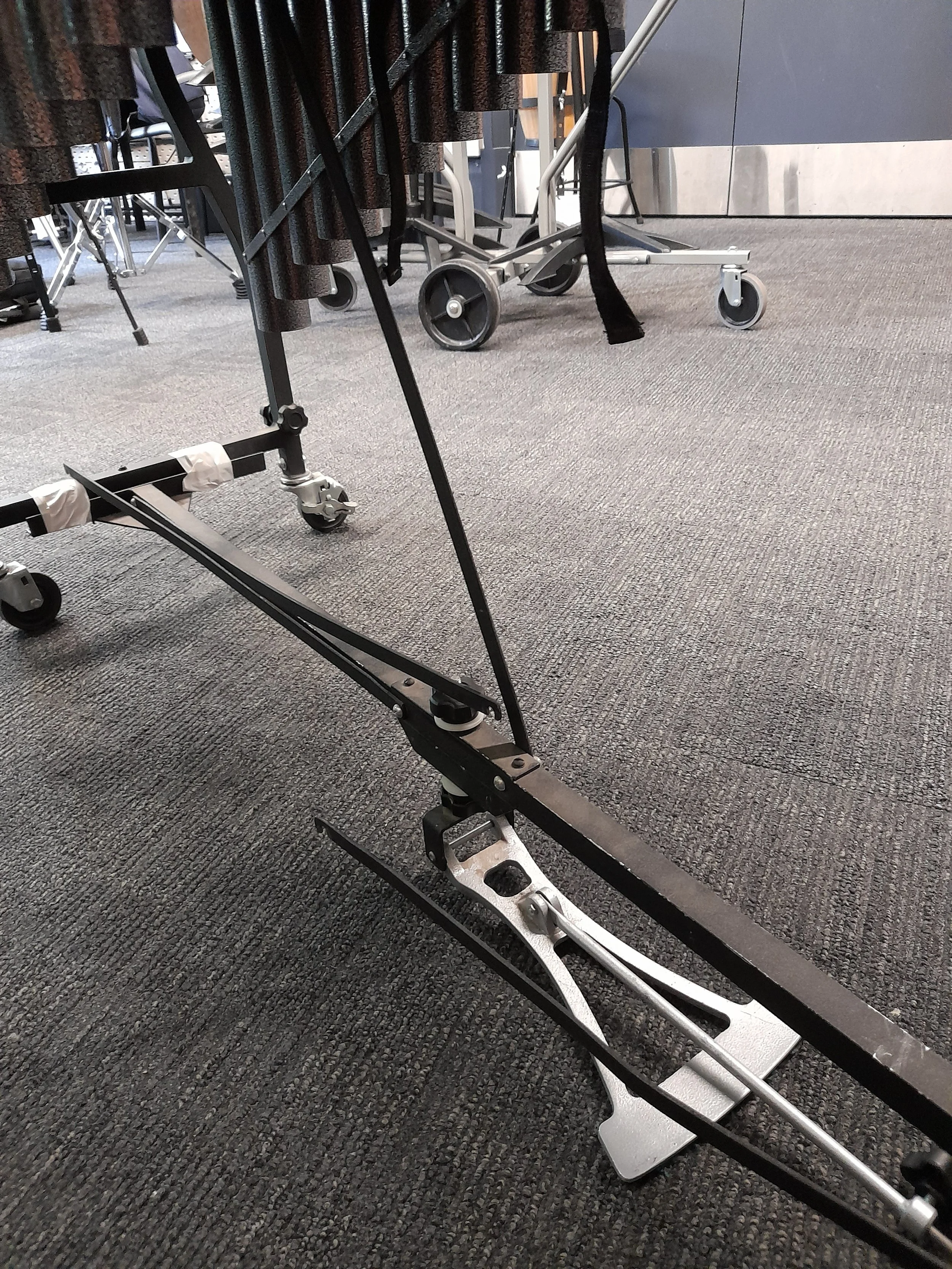
Broken vibraphone with disconnected crossbeams and pedal, supported by duct tape.
4. All of them
Other than accumulation of dust, there are two problems which I’ve encountered with all mallet instruments.
The first is wear and tear. Mallet instruments are played through striking the bars repeatedly. Over time this wears away at the surface of the bars or creates marks. This is easiest to see on vibraphone or glockenspiel bars which darken with dirt, grime, and fingerprints. However, it’s also visible on wooden bars which tend to accumulate bits of rubber from mallets, particularly those used to play glissandos.
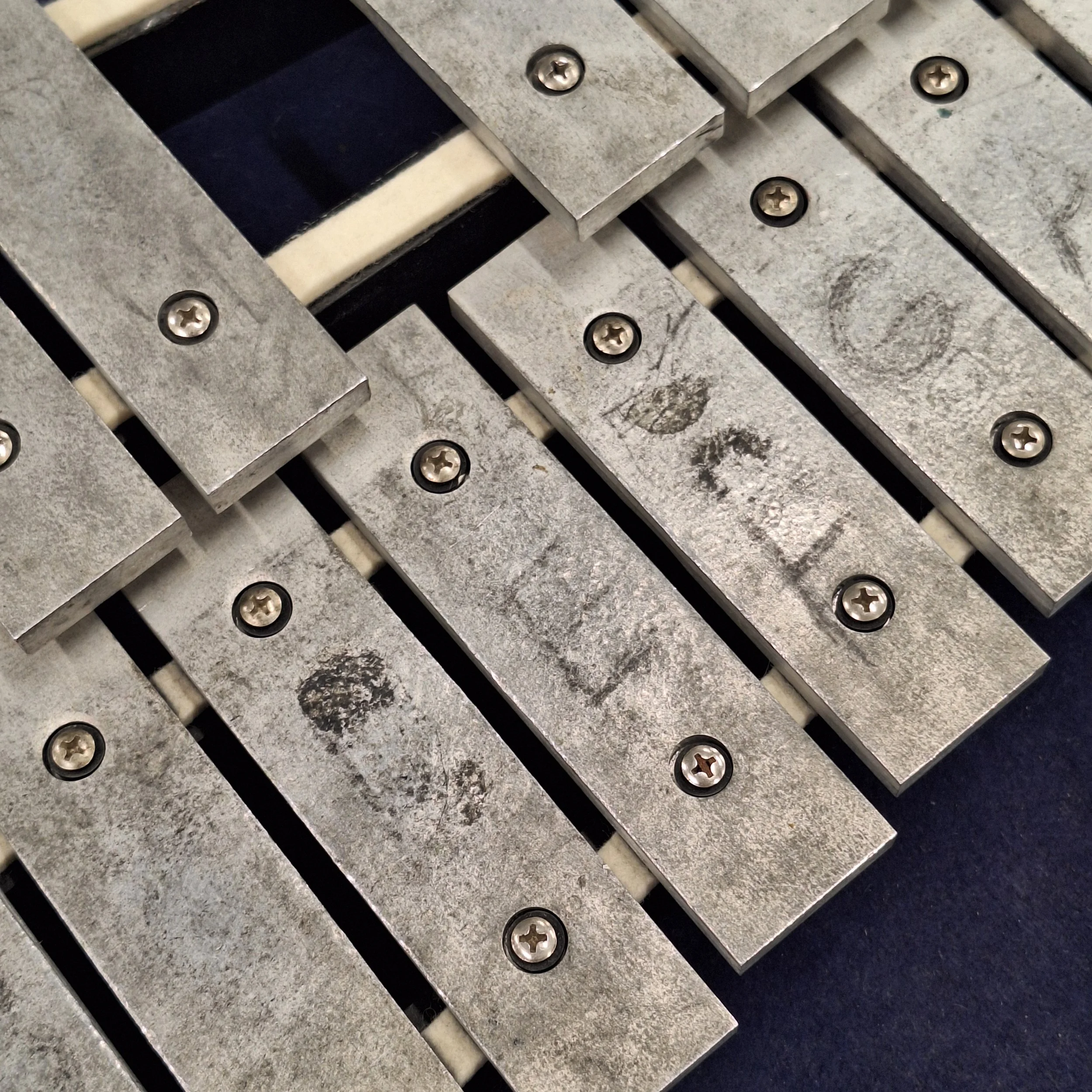
Dirty glockenspiel bars. Note names have been etched in with pencil and there’s evidence of both stickers and blue marker pen.
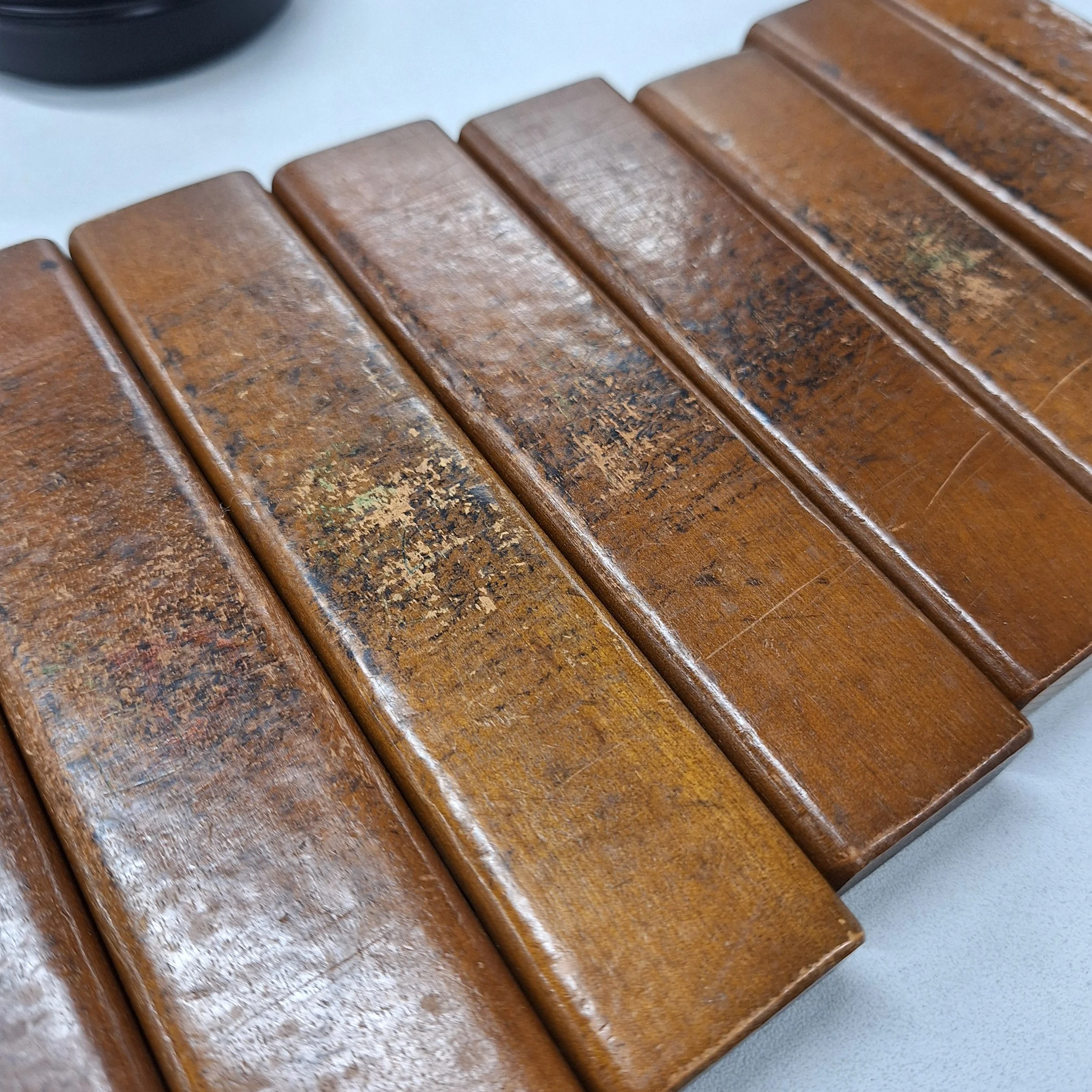
Dirty xylophone bars. Years of mallet rubber is present on the surface and red marker pen has been used to indicate note names.
Lastly, if you hear a rattling sound 50% of the time that’s being caused by loose items which have fallen inside the resonators. Common offenders include mallets, sheet music, erasers, and pencils, but I’ve also been seen this caused by ping pong balls, bits of Medicare cards, LEGOs, magnetic toys, and fake coins from boardgames.
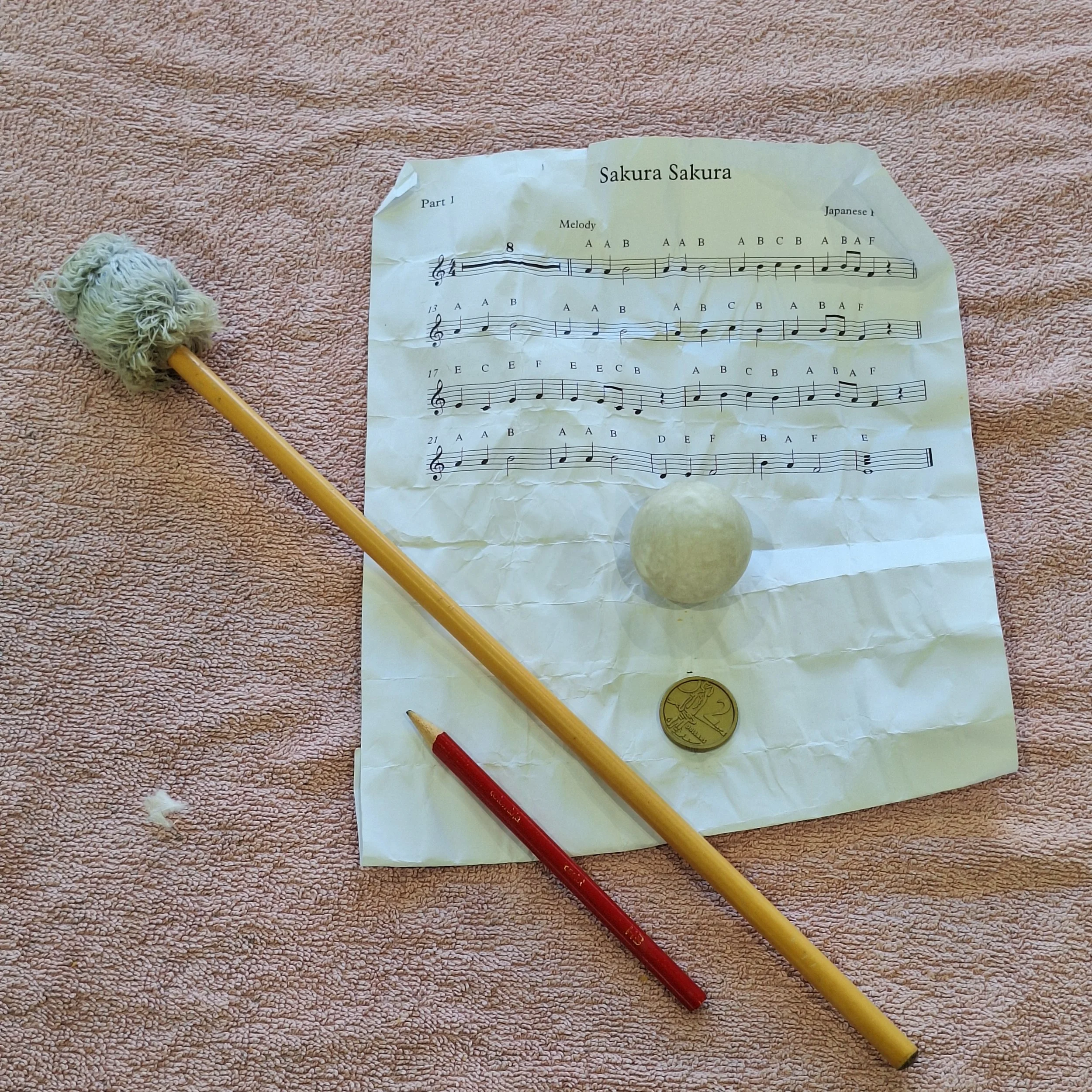
The most recent collection of finds from a marimba: Sakura Sakura sheet music, a mallet, a pencil, a ball, and fake $2 coin.
Well, that’s all for today. Take care and happy playing!