Choosing the Right Mallets
Schools acquire their mallet collections over time, often in conjunction with the purchase of instruments. Orff xylophones and metallophones, for instance, are regularly sold with mallets alongside them. This is a great way of bulking out your mallet collection and accumulating enough for a class set. That said, the quality is usually pretty low.
School ensembles and instrumental lessons are so important for encouraging young performers to continue pursuing percussion. But this enthusiasm and the techniques they’re able to learn properly can be limited by the mallets available. I’ve noticed a trend in schools lately (at least in South Australia), where student percussionists are coming to rely more on their school’s mallet collection rather than buying their own.
And it makes sense!
Mallets are expensive and even as a seasoned percussionist it can be difficult to know which ones to buy. Steve Weiss, for example, features thousands of mallet varieties and subtypes in their catalogue. But unless the product has really good reviews, is linked to a recording, someone can lend you a pair, or you’re lucky enough to try them in a store, then you’re buying blind.
For this reason, most percussionists I know tended to start from the same general selection of mallets before branching out. These mallets were usually recommended to them by their teachers, favoured for affordability, versatility, robustness, and for being more forgiving on instruments while students are learning proper technique.
This month I thought it would be useful to explore those popular recommendations. Whether you’re looking to boost your school collection or a student has asked for advice, I hope this list helps you on your way!
A Note on Mallet Construction
Mallet construction can be divided into two main components: the head and the shaft. Component materials directly affect the sound the mallets make, the way they respond in a performer’s hands, and the instruments they can be played on.
Mallet shafts are typically made of wood (usually birch), rattan, or fibreglass. Wooden shafts are rigid while rattan shafts have more flex and are great for fast passages. In my experience, fibreglass is rarer and mostly used for light glockenspiel mallets.
The seven basic mallet head types are wound (yarn/wool), rubber, plastic, phenolic, felt, wood, or metal (brass/bronze). Wound and felt mallets are the more complex varieties as they combine a softer exterior wrapping with a range of core materials. Each head type will have have different ‘grades’; a spectrum ranging from very soft to very hard which helps indicate how much attack the mallet will have when striking instruments. If you haven’t got a big budget, it’s generally wisest to purchase medium grade mallets.
Wound Mallets
Wound mallets are typically used for marimbas, vibraphones, cymbals, and gongs/tam-tams.

The Mike Balter Pro Vibe Series 23R, affectionally called Balter Blues, are probably the most versatile wound mallet I know. Marketed for vibraphone, these mallets have a distinctive blue cord head (1.5” diameter) paired with a rattan shaft. They work well on vibraphones and marimbas as a medium/medium-hard grade respectively or in the lower octaves of xylophones as a medium-soft grade. They’re also a great mallet for suspended cymbal rolls and some drums or auxiliary instruments, like low toms or woodblocks.
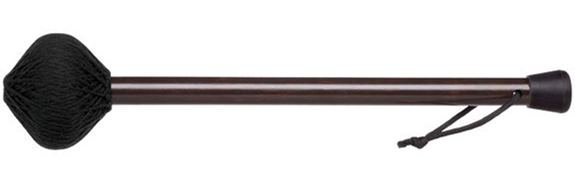
If you’re looking for something with more oomph to play a gong or tam-tam, then you’ll need a mallet with a larger head. A popular choice is something like the Vic Firth Soundpower GB4 beater. This medium grade mallet has a 3 11/32” yarn head and considerably more weight behind it.
Rubber, Plastic, and Phenolic Mallets
The next thing you’ll need are some decent rubber, plastic, and/or phenolic mallets. You don’t want anything too hard otherwise students will start denting the instruments. But if the mallets are too soft, then striking instruments will produce mostly contact sound and audiences won’t be able to hear them.

I’ve found the NR19R from Malletech’s Natural Rubber Series to be very reliable. In the Adelaide Wind Orchestra we use these for practically every auxiliary instrument (especially woodblocks), quieter xylophone parts, or when we’re trying to make a glockenspiel sound like a celeste.
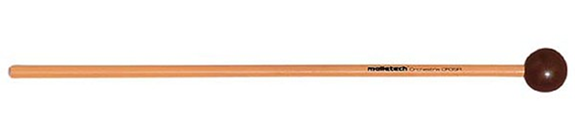
If you need something a bit harder, I’d recommend the OR39R (Hard) mallets from Malletech’s Orchestral Series. They are much louder and have a bit of bite to them, so I wouldn’t use them for more delicate auxiliary instruments. But for xylophone playing these are a ‘gold standard’.
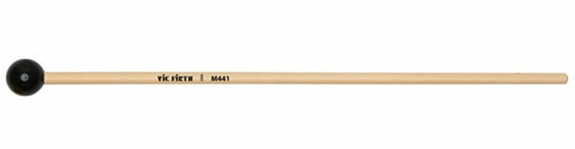
For glockenspiel you typically want a hard grade mallet. Some rubber mallets can be used on glockenspiels, but they usually produce a lot of contact sound depending on the quality of your instrument. Vic Firth’s M441 Articulate Series phenolic mallets (1” head) are a solid alternative.
Felt Mallets
Felt mallets for timpani and bass drum are next on the list.
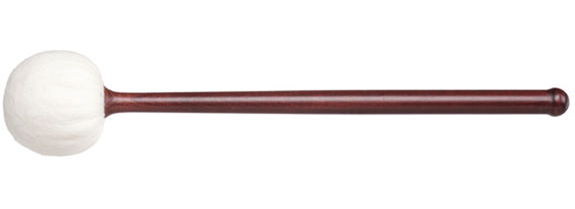
For bass drum, the Vic Firth Soundpower BD1 (General) are a strong choice. These beaters are good for both articulate passage and rolls, so will cover the majority of school repertoire requirements. Nothing fancy, but reliable and produce a full bodied sound.
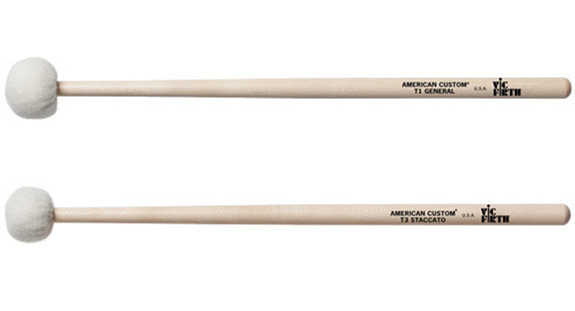
For timpani mallets I once again have to recommend Vic Firth, this time their American Custom Timpani T1 (General) or T3 (Staccato) mallets. I suggest the staccatos largely because I’ve found school students tend to struggle with articulation on timpani. Using a harder mallet helps to offset this.
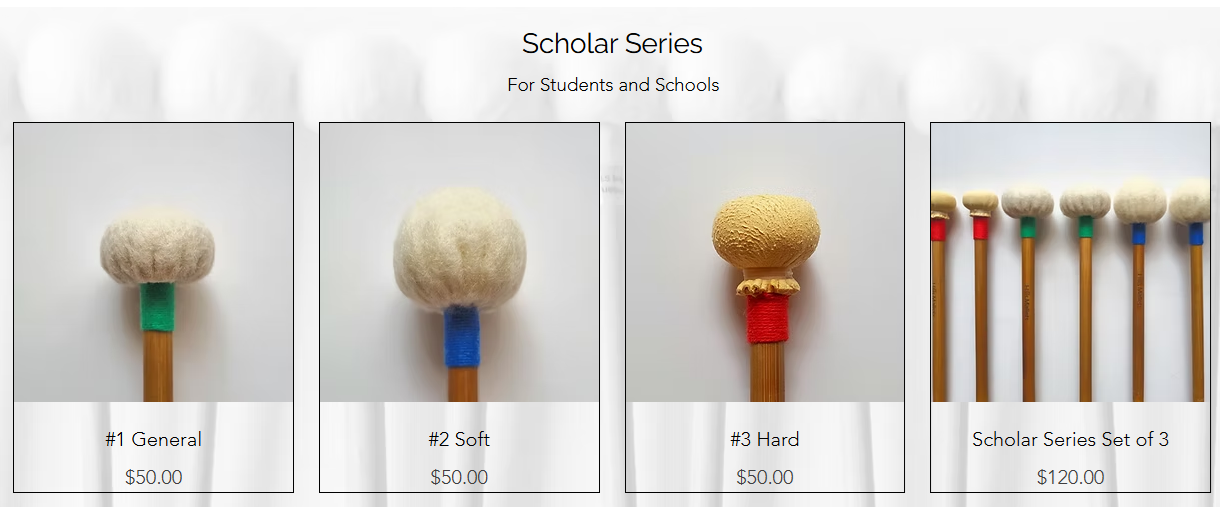
For any South Australian readers, timpani mallets are actually some of the easier mallets to get in SA because we’re lucky enough to have Hill Mallets nearby! The Scholar Series is a terrific option for schools as it provides soft, general, and hard mallet options designed with student percussionists in mind.
Wooden and Metal Mallets
In a school setting I wouldn’t recommend buying mallets with wooden or metal heads. These can be the harshest materials and thus most damaging to instruments if played incorrectly. Students typically won’t have enough training to exercise restraint when using them, and as such they tend to be more specialised, professional mallet types.
Some Contacts
Finally, it’s always beneficial to have some useful contacts to help you out!
I’m happy to answer any percussion questions you may have, but if you’d like to talk to a supplier directly then Optimum Percussion is a great option. Optimum Percussion’s education catalogue is packed full of equipment suggestions for school programmes, and they also sell mallet packs if you want to consolidate your purchase.
Well, that’s all for today. Take care and happy playing!