To Sit or Not to Sit?
Why do professional timpanists play sitting down?
For that matter, why are student percussionists so resistant to sitting down?
“Standing’s more comfortable,” they say.
Yet these same students will feel totally at home sitting to play drum kit or piano. So, what’s the point of difference?
Unlike a drum kit stool which places you close to the ground, timpani seats are usually equivalent to a gas-lift bass stool. Sitting on one with your feet on the pedals suspends you a few inches off the ground. Generic bass stools often won’t have a back, so you’ve also got nothing to brace you from behind. Add in unreliable wheel brakes which allow the timp to roll away when adjusting the pedal, and the whole business can feel pretty precarious.
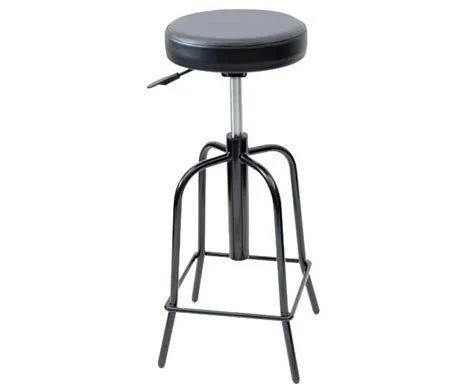
In less advanced musical settings, you can get away with standing up to play timps. The repertoire isn’t as complicated so there’s unlikely to be lots of pedal changes or fast movement between drums. But as the timp parts get harder it becomes more necessary to consider sitting down. Indeed, in the long-run it actually makes it easier to play timpani!
Don’t believe me? Read on McDuff!
Performer Height
The vast majority of timpani are not height adjustable (indeed, the only model I know of are Adams’ Revolution drums). While the bowl sizes increase or decrease, the drums remain at a flat, fixed height.
Unfortunately, all percussionists are not the same height and thus when playing standing up they’ll try to compensate for this discrepancy.
If the player is too short for the instrument, then they’ll raise their shoulders and arms. If the player is too tall, then they’ll stoop over and drop their wrists at a tight, bent angle. Both cause tension and ruin the player’s ability to apply technique accurately. This especially effects the quality of sound produced, can increase likelihood of stick-to-rim clicks, and complicate moving quickly between drums.
These are similar problems to when mallet instruments aren’t the correct height. The difference being that more and more mallet instruments are being designed to be height adjustable. Those that aren’t are usually light enough to be raised on blocks.
For timpani, sitting down is an equaliser.
Like the driver’s seat in a car, adjusting the timpani stool allows performers to find the right arm-to-leg ratio for their height. Since the drums have a fixed height and cannot be adjusted to fit the player, using a stool allows the player to adjust themselves to fit the drum.
When players sit at timps for the first time you’ll often see them push the drums away because they’re suddenly too close (mallets hitting the centre of the drums rather than the correct playing zones). With feet situated comfortably on the pedals and the stool as a centre point the performer settles into a more natural playing position, one where their motions are smooth and unimpeded.
Pedal Changes
As timpani have evolved, they’ve become more complex. No longer confined to the back of a horse and a limited range of notes, composers are taking advantage of the instrument’s full abilities. Especially the pedal.
From a student perspective, pedal work starts appearing in intermediate repertoire and will usually coincide with key changes. They require performers to change the note while also counting bars rest and maybe even still playing. The harder the repertoire gets, the greater variety of notes timpanists are required to play and the more frequent these pitch changes occur.
The complexities of getting from A-B (finding the right pedal, figuring out which note to change it to, moving the pedal up or down) is when you start seeing students do “The Timpanist Shuffle”.
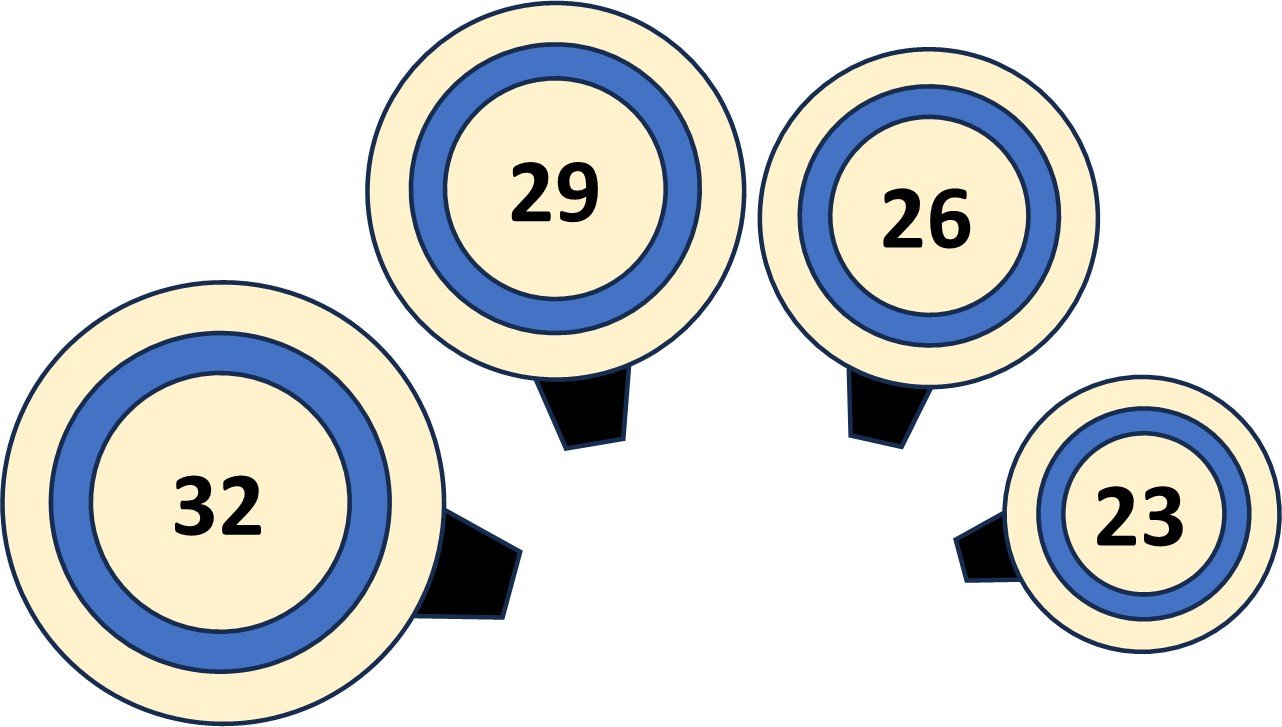
Diagram of four timpani arranged in international style (32, 29, 26 and 23 inch diameters)
Say you’re standing to play four timpani and need to change pitches on the 32 inch and 26 inch drums. Placing your left foot on the 32’s pedal requires you to shift your weight, balancing on your right leg with your hips angled towards the 32. You adjust the pitch on the 32 without issue, hooray! But now you need to change the 26 and you’re facing the wrong way!
How do you get there?
Option A: put your left foot back on the ground, recentre your weight, take two shifting steps to face the 26, lift your right foot onto the new pedal thus shifting your weight to balance on your left leg.
Option B: keep left leg in the air and pirouette to the 26, turning with all your balance still on your right leg.
Neither is very efficient, and both may cause you to overbalance. Worse still if you’re using clutch mechanism pedals which require an entire leg motion to change pitch.
But what if you used a chair?
Gas-lift bass stools are brilliant for timpani because they can swivel. Rather than shifting your weight from side-to-side and taking lots of small steps, your centre of gravity is concentrated in your core. This allows you to have feet on any two pedals at all times, preparing in advance for changes with minimal readjusting.
In the above scenario, if you were seated you could place your feet on the 32 and 26 pedals from the beginning and adjust at your leisure. No need to rotate or perform The Timpanist Shuffle!
In the end it’s all about economy of motion. Using a seat simplifies pedal changes.
Reasons to Stand
All said and done, I admit there are situations where it’s more realistic to stand.
For starters, some music isn’t designed to be played sitting. Timpani are more frequently being included in multi-percussion set-ups. The nature of how these instruments are arranged means standing is the most logical option and enables easier access to all components. This may also apply to pieces where the timpanist is required to play an instrument in another zone of the percussion section. Standing up makes it safer and faster to transfer from one instrument to the next.
Marching timpani are another scenario where standing is more likely. These drums will typically be smaller and hark back to the days of horse-bound timpani. They can be worn by the timpanist, static, or, as in the video below, pulled forward by other people. Notably the pedal either isn’t in use or does not exist.
Procession of the Harmonie Sint Petrus en Paulus Drum Band filmed from a balcony during the Heiligdomsvaart in Maastricht.
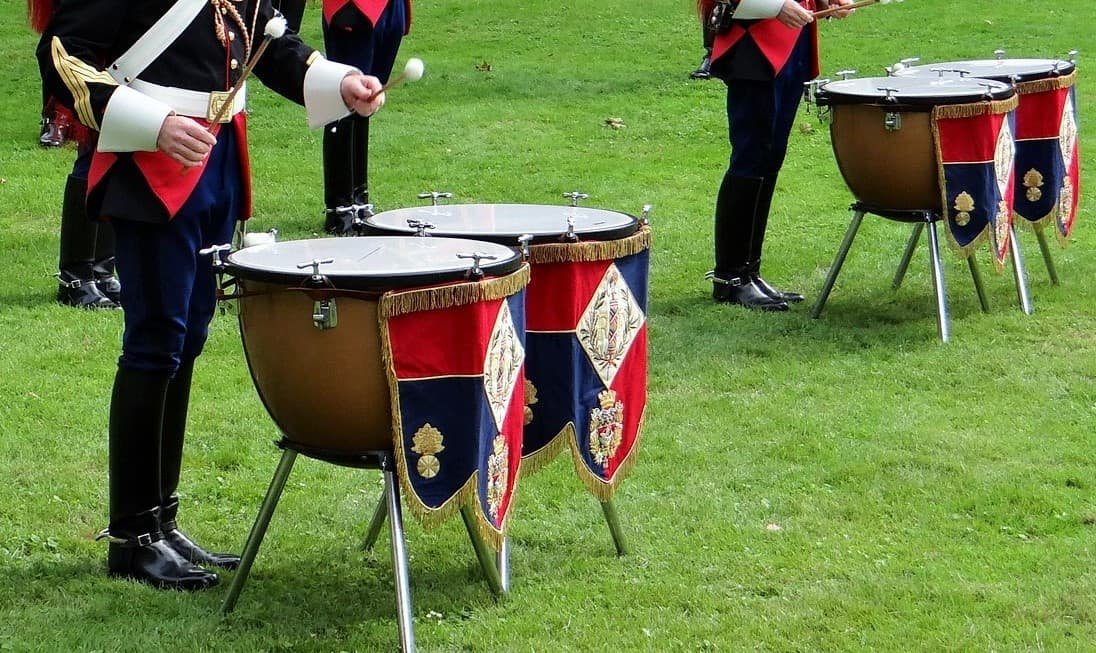
Two pairs of marching timpani. The drums don’t have pedals and are instead tunable via hand cranks.
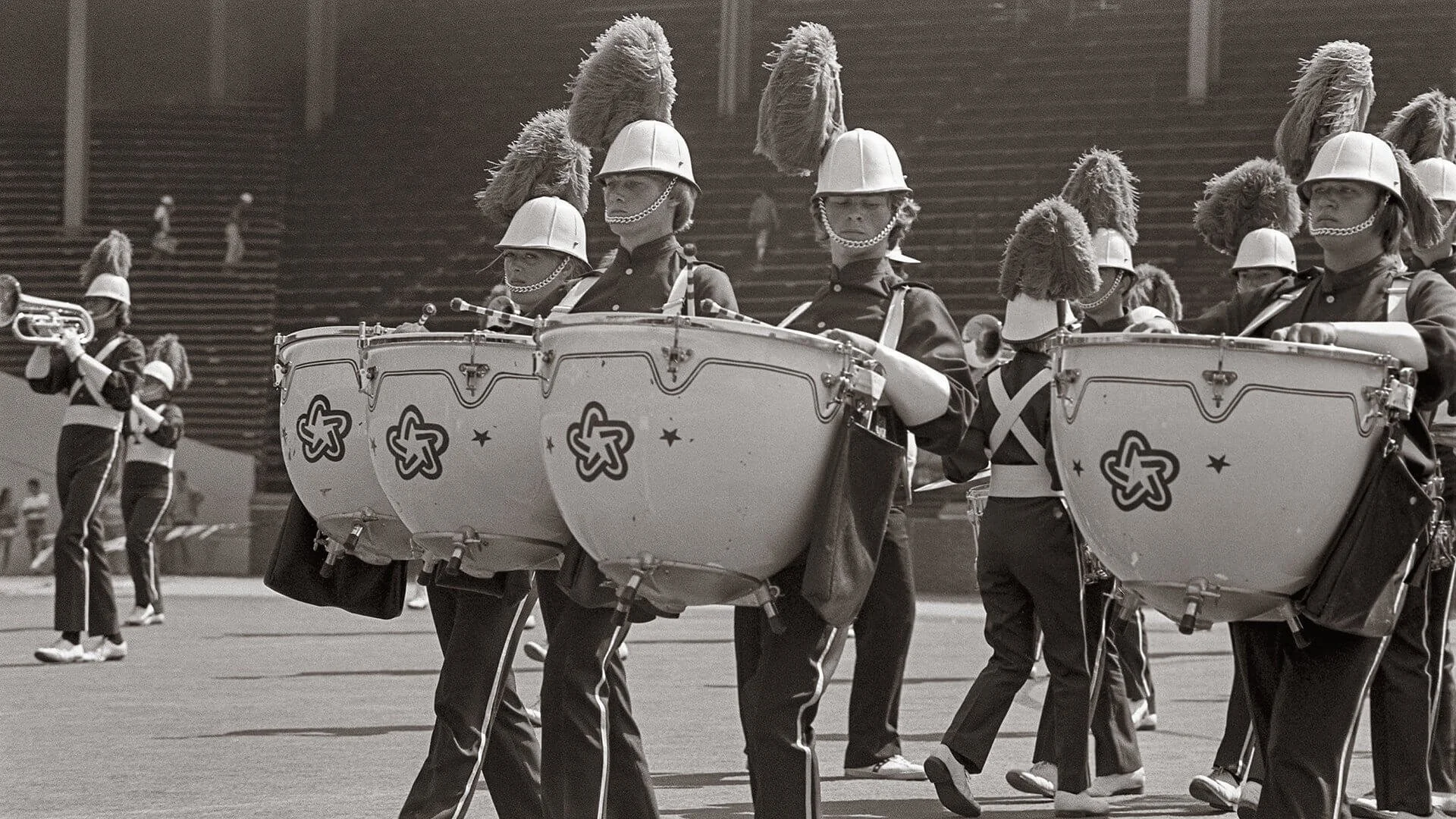
Four timpanists for the Blue Stars at the Drum Corps International Whole Championship, 1976. The drums are on harnesses and do not have pedals.
And of course, there are also practical situations like lack of resources. If a school only has two gas-lift stools and these are commandeered by the double basses and/or conductor, then the timpanist has no recourse but to stand.
Ultimately it’s up to the performer how they wish to play timpani. But to anyone who’s ever struggled with pedaling, back and wrist pain, or stick clicks, I strongly recommend you give sitting down a go. It might surprise you!
Well, that’s all for today. Take care and happy playing!